Flutter vs React Native for Startup App
Flutter vs React Native: Which Framework Is Best for Your Startup in 2026?

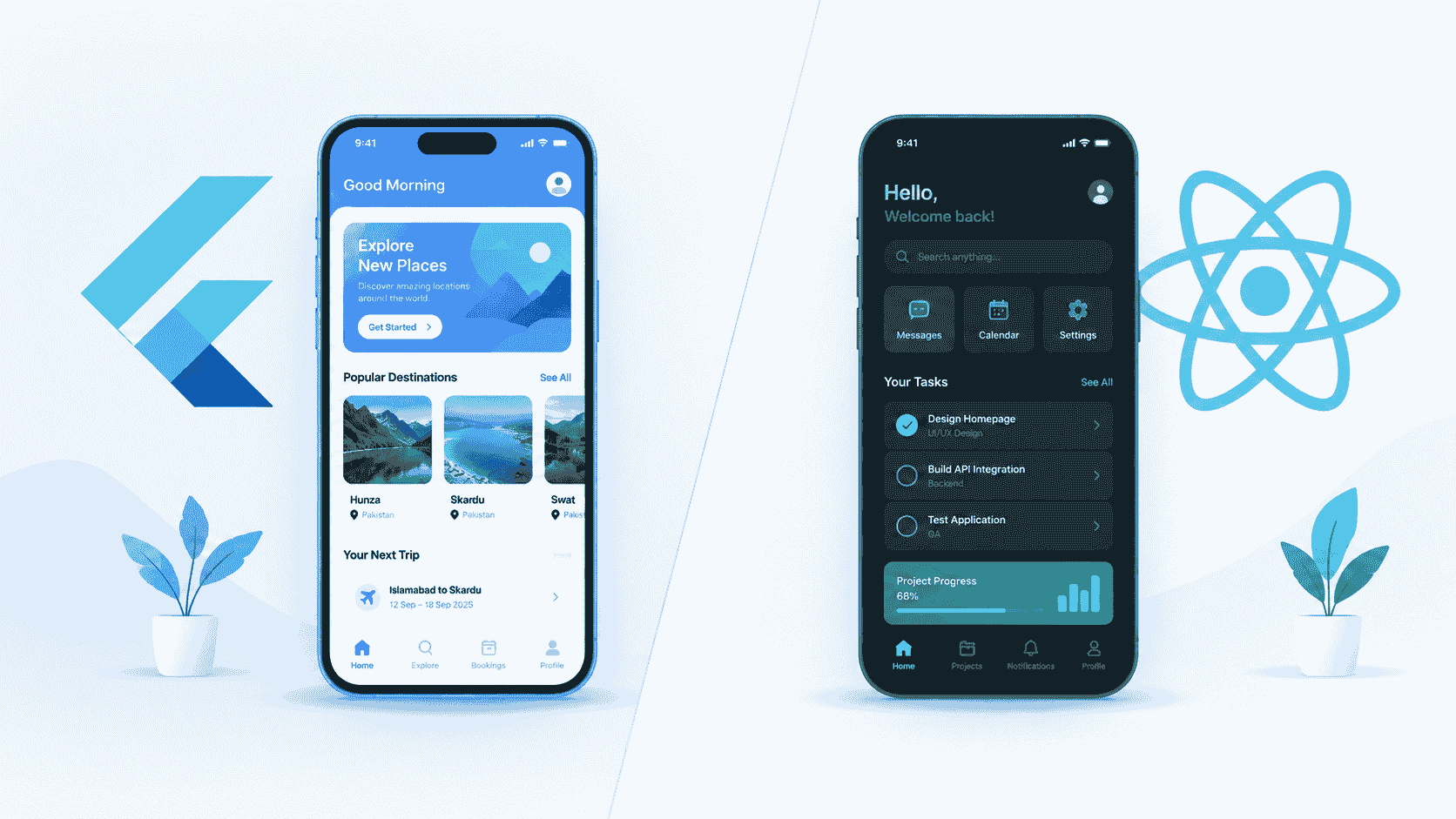
Picking a mobile framework is one of the first big technical decisions a startup founder makes — and it's harder to undo than most people expect. Rebuilding an app six months after launch because you picked the wrong stack costs time, money, and momentum you don't have to spare.
Short answer: Flutter is generally the better pick for startups that want one consistent UI across iOS and Android with less long-term maintenance overhead, while React Native is the better pick if your team already knows JavaScript/React or you need deep native module access early on. Here's the full breakdown.
Quick Comparison Table
Factor Flutter React Native Language Dart JavaScript/TypeScript UI Consistency (iOS vs Android) Very high — same rendering engine Moderate — relies on native components Performance Near-native (compiled to native ARM code) Good, but bridge/JS-thread overhead possible Development Speed Fast, hot reload Fast, hot reload Hiring Pool Smaller but growing fast Larger (JS developers are common) Best For MVPs needing pixel-perfect, brand-consistent UI Teams with existing React/JS skills Backed By Google Meta (Facebook) Why This Decision Matters More at the Startup Stage
Early-stage startups don't have the luxury of over-engineering. You're usually optimizing for three things at once: speed to market, budget, and the ability to iterate fast based on user feedback. The framework you choose directly affects all three.
Both Flutter and React Native let you write one codebase and ship to iOS and Android, which is why they dominate startup app development in the first place — building native iOS and native Android apps separately would roughly double your budget and timeline. The real question isn't "cross-platform or not," it's "which cross-platform framework fits your specific situation."
Flutter: Strengths and Trade-offs for Startups Strengths Pixel-perfect consistency — Flutter renders its own widgets directly instead of relying on native OS components, so your app looks and behaves identically on iOS and Android. Performance — Dart compiles to native ARM machine code, so animations and UI interactions feel closer to native than React Native's bridge-based approach. Single codebase, single design system — fewer places for bugs to hide, faster QA cycles. Growing ecosystem — backed heavily by Google, with the same codebase extendable to web and desktop later. Trade-offs Dart is a smaller hiring pool than JavaScript, though this gap has narrowed a lot recently. Some very niche native integrations may need custom plugin work. React Native: Strengths and Trade-offs for Startups Strengths JavaScript/TypeScript — if your team already knows React for web, the learning curve is much shorter. Massive community and library ecosystem — more third-party packages simply because it's been around longer. Native component usage — renders actual native UI components, so some platform-specific look-and-feel comes for free. Trade-offs UI consistency between iOS and Android can require extra styling work. The JavaScript bridge can introduce performance overhead in animation-heavy or data-heavy apps if not optimized carefully. More frequent version/dependency conflicts across third-party libraries in larger projects. Flutter vs React Native: Head-to-Head Comparison Development Speed
Both frameworks offer hot reload, letting you see changes instantly without a full rebuild. In practice, speed differences between the two are small — team experience matters more than framework choice here.
Performance
Flutter has a structural edge for performance-heavy apps (games, complex animations, AR/camera-heavy features) because it compiles directly to native code. React Native has closed much of this gap with its newer architecture, but Flutter is still the safer default when performance is a core product requirement.
UI/UX Consistency
This is where Flutter clearly wins for startups that care about brand consistency. If your product's visual identity is a differentiator — fintech, D2C, health apps — Flutter avoids the "looks different on Android" problem entirely.
Cost to Build an MVP
Cost depends more on scope and developer rates than framework choice. For a basic MVP with 8–12 screens: Flutter typically needs slightly fewer dev hours due to fewer platform-specific fixes, while React Native has a comparable base cost but may need extra QA time for cross-platform UI polishing.
Hiring and Long-Term Maintenance
React Native has a larger global talent pool since JavaScript developers vastly outnumber Dart developers. Flutter's talent pool has grown fast too, especially among developers who chose it specifically for its performance and consistency benefits.
Which One Should Your Startup Actually Choose?
Choose Flutter if:
- Brand consistency across iOS and Android is a priority
- Your app involves animations, custom UI, or a highly polished feel
- You want to potentially extend into web/desktop from the same codebase later
- You're hiring a specialized mobile development agency or freelancer
Choose React Native if:
- Your existing team already has strong React/JavaScript skills
- You need to move fast with a team already comfortable in the JS ecosystem
- You anticipate needing specific native SDK integrations early
Frequently Asked Questions
Is Flutter better than React Native for startups in 2026?
For most startups prioritizing a consistent, high-performance UI across both platforms with one codebase, Flutter is generally the stronger choice in 2026. React Native remains a strong option for teams already invested in JavaScript/React.
Which is cheaper to build an app in — Flutter or React Native?
Base development costs are similar for both, since both use a single codebase for iOS and Android. Flutter often needs less QA time for cross-platform UI fixes, which can offset costs slightly over the project lifecycle.
Can Flutter apps look native on both iOS and Android?
Yes. Flutter renders its own UI via its engine rather than relying on the OS, giving developers full control to match either platform's design language or maintain one unified design.
Is React Native still relevant in 2026?
Yes. React Native is still actively maintained by Meta and widely used, especially by companies with existing React web teams. The "Flutter vs React Native" decision is about fit, not about one framework being obsolete.
How long does it take to build an MVP in Flutter or React Native?
A typical startup MVP with 8–15 screens and standard backend integration takes roughly 6–12 weeks with either framework, depending on scope, design complexity, and team size.
Final Takeaway
There's no universally "best" framework — only the best fit for your team, timeline, and product goals. If you want a polished, brand-consistent app with strong performance and you're open to hiring specialized mobile talent, Flutter is the safer long-term bet for a startup in 2026. If your team already lives in JavaScript and needs to move fast with existing skills, React Native remains a solid, proven choice.